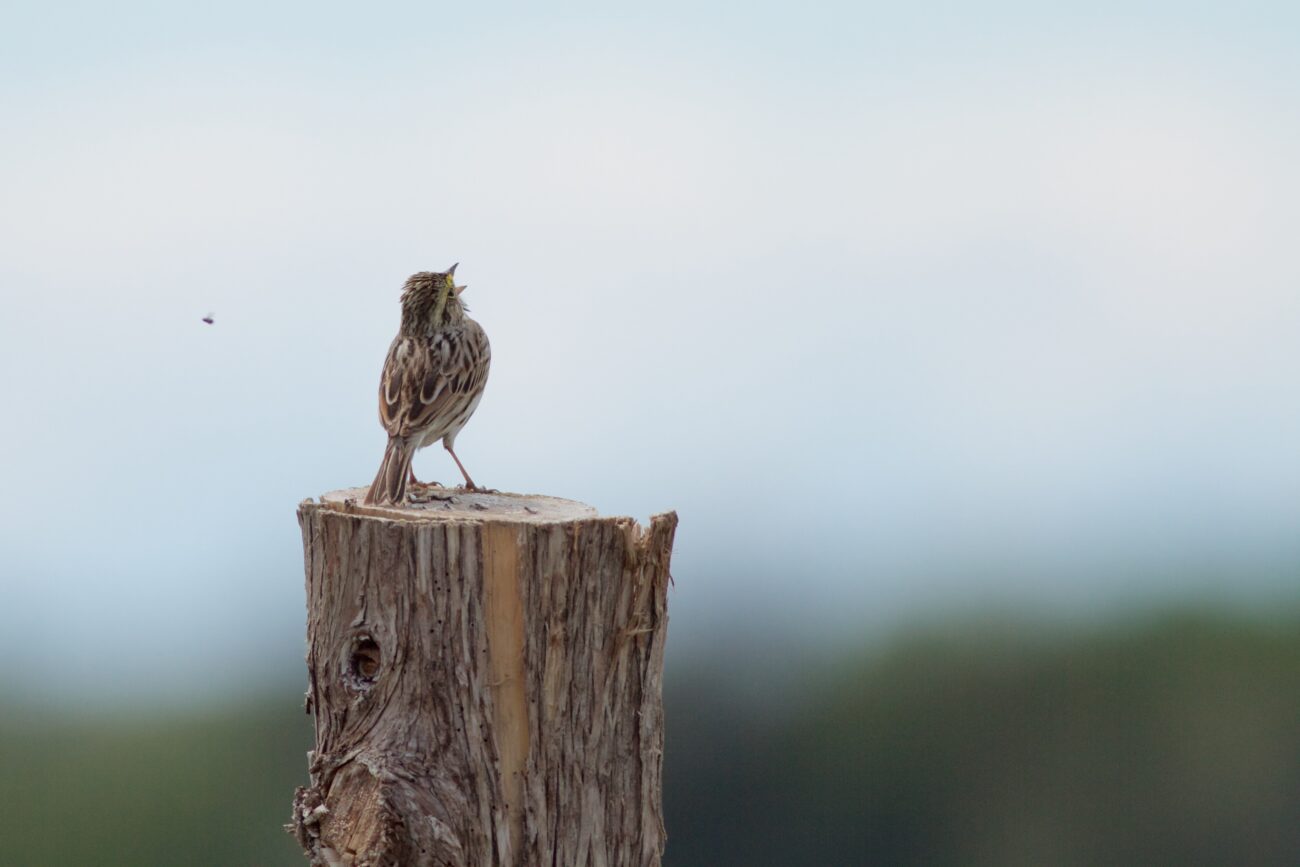
The Couchiching Conservancy protects over 15,000 acres that are home to various flying species of birds, bats, and insects. Have you ever stopped and wondered “Where are they flying to?”
many of these animals live here, many are just passing through along their migration routes. Studying migration used to require individually capturing, tagging, releasing, and then recapturing animals to document the travel patterns. Tagging animals has helped scientists learn more about how birds, bats, and insects live and move. However, a major work limitation and stressor for animals is that individuals have to be recaptured. The chances of recapturing the same individual twice is incredibly low.
The Motus Wildlife Tracking System, or just Motus (the Latin word for movement), monitors the tags on flying animals without a need for recapture. Researchers capture the flying species and attach a tag that includes a tiny radio transmitter, called a nanotag, that sends out a signal. The nanotags are lightweight and can be safely fitted to the smallest birds, bats, and even large insects. When the animal flies by a Motus tower, the nanotag signal is received and logged. Motus has strategically placed towers all over the world that collect information on flying animal migration patterns. Motus towers have antennae that use automated radio telemetry that can capture the flight of animals up to 20 kilometers diameter!
Motus is a global monitoring program set up by Birds Canada in 2014, in partnership with universities, to collaborate on tracking flying animals. Motus towers can be placed in a variety of locations. Currently, there are over 2,300 towers in 30 countries around the world. These advancements in modern wildlife tracking technology have helped researchers track tagged flying species over longer distances and time periods, allowing for more detailed and accurate data. The data is then collected, downloaded, and sent to Birds Canada. They store it in their records and use it to support ecosystem management and conservation efforts by researchers and the public.
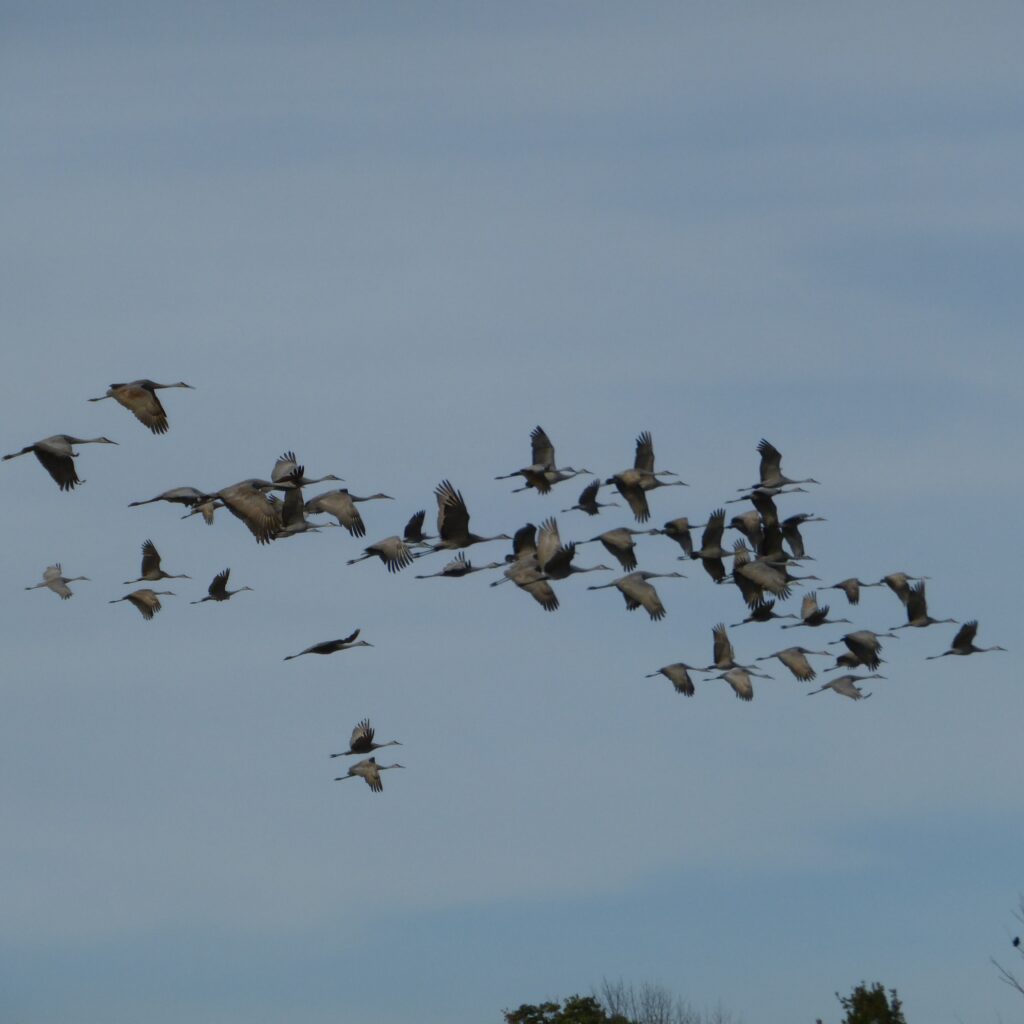
The Couchiching Conservancy is currently working with Birds Canada, Wildlife Preservation Canada, and local landowners to upgrade our Motus Towers so we can continue monitoring biodiversity in our region with up-to-date technology. The Motus project’s large dataset informs our stewardship of the land and species, and connects our organization to the research being done by scientists around the world.
The Couchiching Conservancy is involved with three Motus towers in the Carden Conservation Corridor. This helps monitor the Great Lakes Migratory Flyway, a very important route connecting the tropics to the Arctic and all areas in between.
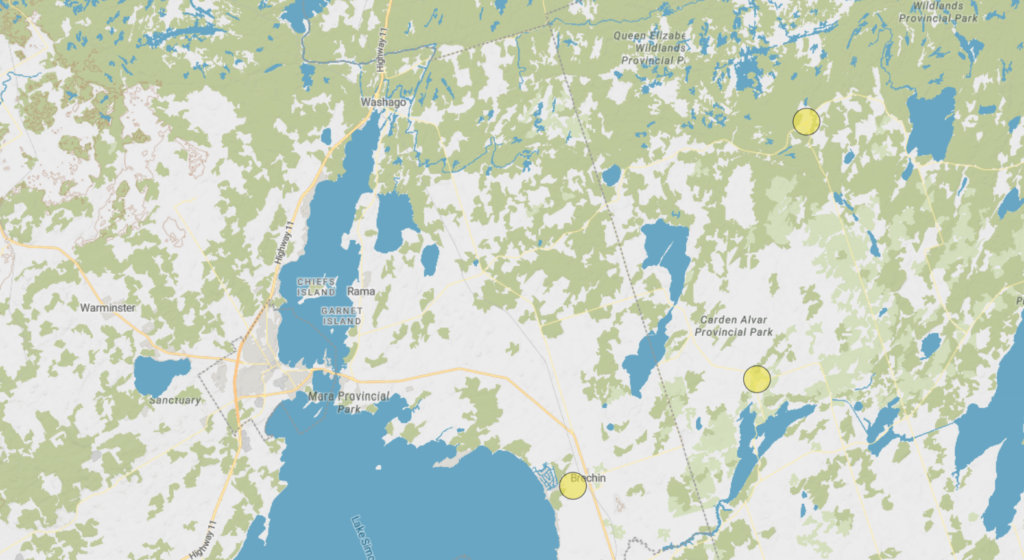
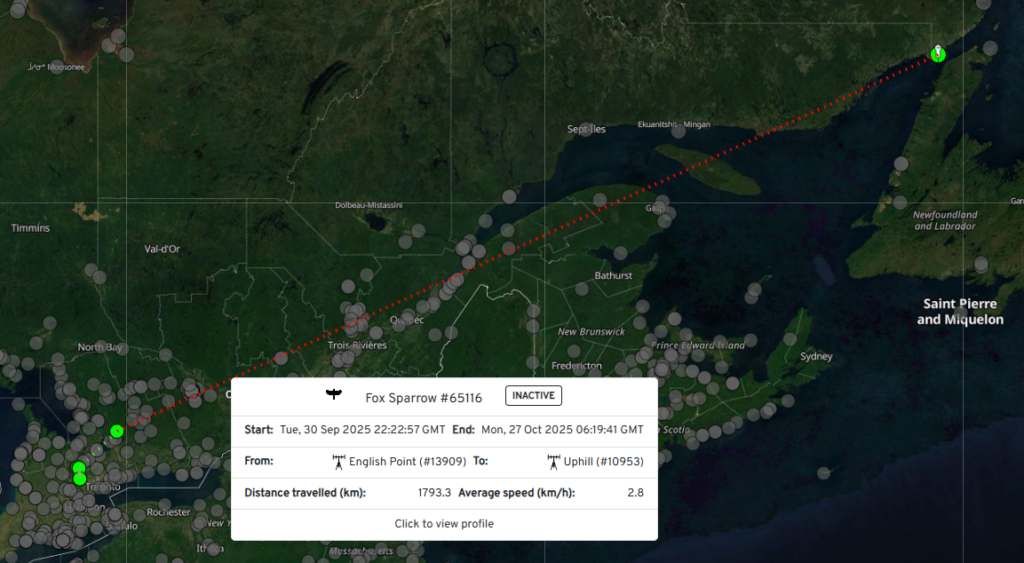
Since the Couchiching Conservancy’s Motus towers began operating in 2016, they have detected more than 225 tagged birds. These include several species at risk such as Loggerhead Shrike, Common Nighthawk, Eastern Whip-poor-will, Wood Thrush, Canada Warbler, Kirtland’s Warbler, Red Knot, and others. These detections highlight the importance of our region as a place for birds to rest, migrate through, and breed as they travel across North America. In September 2025, the Uphill Motus Tower even detected a Fox Sparrow that had travelled 1,793km from English Point, Newfoundland!
Community support and partnerships allow the Couchiching Conservancy to work with Motus Towers. We are able to install, maintain, and monitor animal migration with the Motus Towers through collaboration of local landowners and organizations. This work helps ensure continuous collection of high-quality data and strengthens our stewardship and conservation efforts.
If you’re interested in learning more about Motus project contact us for more information!
Written by Emily Hawton, Community Engagement Ambassador.