To increase the community’s awareness of The Couchiching Conservancy’s work, we’re writing a monthly column in Orillia Matters. This was originally published on Nov. 20th.
“Mother Nature deserves seat at boardroom table”
Canada recently ranked at the bottom of a list of countries in Nature Connectedness.
Canada! Land of trees, rocks and rivers. The nation that proudly has a LEAF on our flag!
Wait, what is Nature Connectedness?
Essentially, it’s when people see themselves as part of a whole. The ability to go outside, see centipedes, oak trees, rain, woodpeckers, and sun, and understand you are part of that natural system. And Canada, despite our granite shores, towering pines and rocky mountains, has just rated 57th out of 61 countries in a global study in connection to nature. Rock bottom was Spain. Top of the pack was Nepal.
An article in The Guardian about the study, explained how nature performs services we could never afford to purchase. For free. Nature cleans the air, drains excess water, regulates temperature and provides food. She’s like a Hepa air filter, sump pump, air conditioner and hydroponic lab we didn’t have to buy.
Yet we don’t value it. I mean that literally. Outside of tourism, we place no economic value on nature, but if we had to buy what nature provides, we’d be bankrupt. When decisions are made, we tend to think of nature as always there and quite attractive. But The Guardian article asks what would it look like if Nature was a stakeholder in our decisions? If she sat at the board room table and her voice held the same weight as politicians and economists?
Recently The Couchiching Conservancy, your local land trust, had a community meeting in Carden, inviting the residents of Lake Dalrymple to come and hear about what’s going on in their area. Residents, farmers, cottagers, quarries, conservation groups, and even representatives from the Department of National Defence were all there. For years, these groups have been meeting annually to discuss issues in the community. It’s no coincidence the area of Lake Dalrymple has more protected land than other regions around Orillia.
Kawartha Lakes Fire Rescue Service showed a video about how to protect your home from wildfire using research from homes that escaped flames out west. The most effective preventative step, as wildfire seasons are moving south in the province, is to eliminate trees, gardens, shrubs and mulch within 10 metres of your home. Not advice many Canadians want, or are able, to comply with.
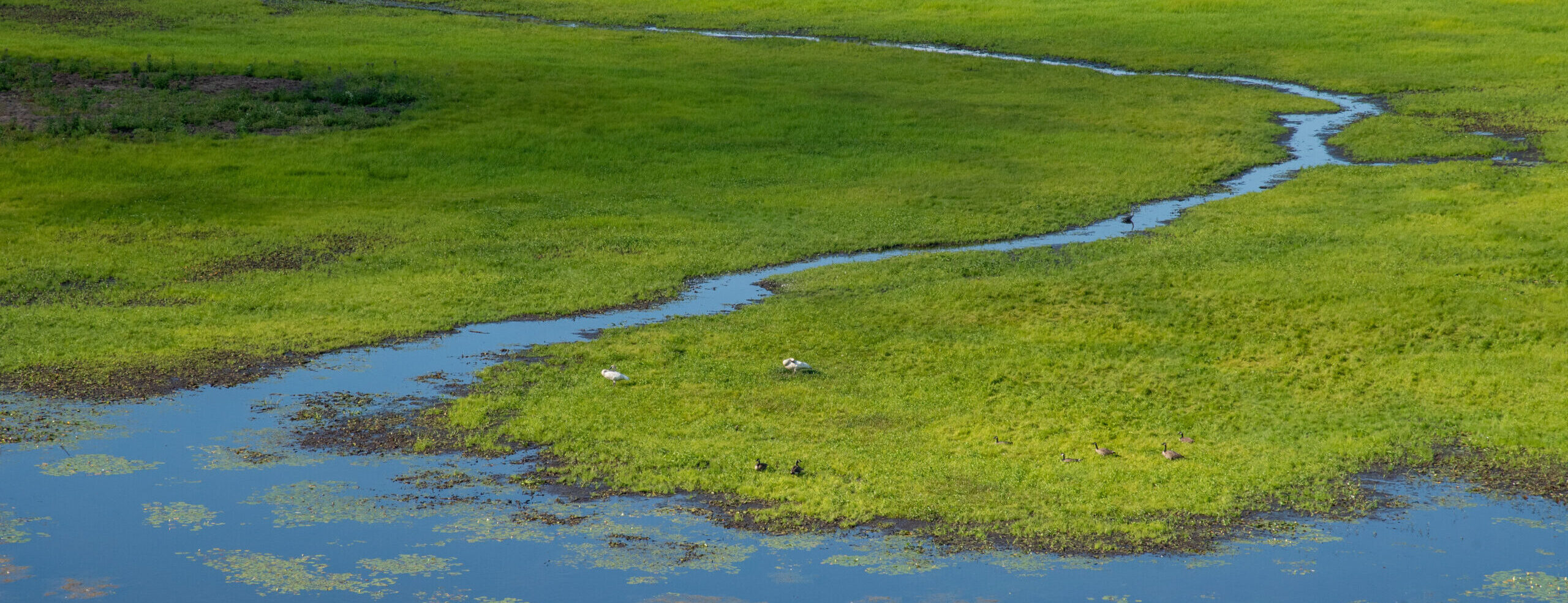
The most interesting discussion of the day followed this presentation. There was a wildfire in the area over the summer, but it didn’t spread far. One of the main reasons it stayed small, was because it had wetlands on two sides. One of the residents put up her hand and said, “I think the most pertinent thing here is that wetlands are directly responsible for stopping forest fires and I think we need to focus on that.”
Yet another service nature performs for free. I think back to the article imagining Nature as a stakeholder at the board room table. I am grateful to the woman who raised her hand, and made sure everyone there realized what those wetlands accomplished. Wetlands act as a firebreak, and filling them for housing makes communities more vulnerable to forest fires in hot, dry summers like the one we just had. If we valued nature for what it provides, not only would Canadians rank higher in nature connectedness, but more of us would understand our role and responsibility in the natural system.
Your local land trust is a voice for Nature. Couchiching Conservancy protects nature, and her services, for future generations.
This is the latest in a series of columns by Meg Whitton formerly of Bounce Radio, now working in conservation at The Couchiching Conservancy. The Couchiching Conservancy is a non-profit land trust that protects over 15 000 acres of land in the Orillia region.